
Llamas should be sheared of their burden of wool for the summer months. A complete shearing, head to toe, on longer-wooled llamas, especially those that have developed matted wool due to lack of regular grooming, can be a heaven-sent gift to your llama! Other shearing styles are popular that do not remove as much wool. Belly, or barrel cuts, with attention paid to opening up “breathing space” in the arm pits, in front of the rear legs, and under the tail, are often used on show llamas.
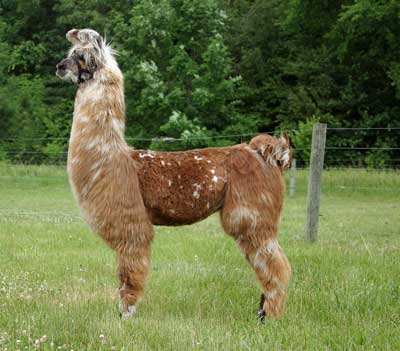
Got My Vote Showing off his Summer Haircut
It is dangerous to leave a llama unsheared, or to not shear enough wool to provide adequate cooling just to make the llama more attractive at a show. In the past several years, the majority of llamas participating in shows in the warmer season are shorn.
Any animal developing heat stress symptoms that has not been sheared should be sheared immediately.
We typically shear all llamas over a year old, although we have sheared younger animals with particularly heavy wool sooner. We also shear our short-wooled llamas. Leaving about 1 inch of wool will keep the llama from sunburning. Regular sheep shears or Fiscar Scissors can be used. Shearing should be performed before hot weather starts, which will also give time to grow back a significant coat for winter protection.
Shears
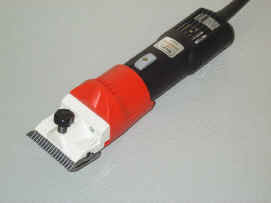
Lister Sheers
Many different tools can be used to shear your llamas. If you only have a few llamas a large pair of Fiscar scissors can be used to shear your llama. Scissors give a nice mottled or contour look. If you have more than just a few llamas you may want to invest in a set of electric shears and one or more sets of extra blades (1 set for every 3 to 4 llamas). The extra blades enable you to work your way through the entire herd before you have to send your blades back to be sharpened. Our favorite set of electric shears are the Lister Lasers (Orange). They are a little heavier than the Lister yellow handle shears but are much more powerful and enable you to get more shearings with a set of blades. We have had very good success sending our blades back to http://www.premier1supplies.com/. They have very quick turnaround and do an excellent job of returning your blades in like new condition.
I would caution against sending your expensive blades to your local sharpening service because it takes special centerless grinders to grind the correct curvature into the surface of the blades. If the blades are ground flat they can overheat and loose their temper.
